Toyota Vios vs Hyundai Accent: Philippines 2026 Comparison
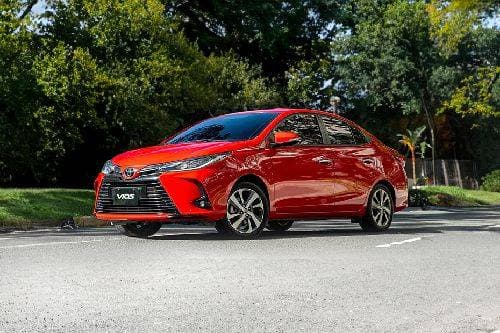
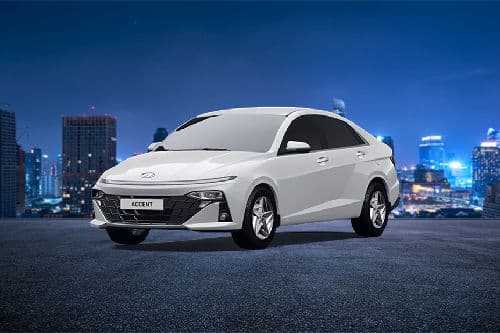
Quick Verdict
The Toyota Vios edges out the Hyundai Accent with better highway fuel efficiency (23 vs 20 km/L) and a higher Expressway Score (72 vs 68).
Expressway Score Comparison
Toyota Vios
72
EXCELLENT
Hyundai Accent
68
GOOD
Score Breakdown
| Category | Toyota Vios | Hyundai Accent |
|---|---|---|
| Highway Fuel | ★★★★★23 km/L | ★★★★★20 km/L |
| Highway Comfort | ★★★★★ | ★★★★★ |
| Safety (ADAS) | ★★★★★7 airbags | ★★★★★6 airbags |
| Cargo Space | ★★★★★506L | ★★★★★480L |
Key Specs: Toyota Vios vs Hyundai Accent
| Spec | Toyota Vios | Hyundai Accent |
|---|---|---|
| Price Range | ₱738,000 — ₱908,000 | ₱790,000 — ₱1,038,000 |
| Expressway Score | 72/100 | 68/100 |
| Highway Fuel | 23 km/L | 20 km/L |
| City Fuel | 14 km/L | 13 km/L |
| Engine | 1,329 cc | 1,497 cc |
| Power | 98 hp @ 6,000 rpm | 115 hp @ 6,300 rpm |
| Torque | 123 Nm @ 4,200 rpm | 144 Nm @ 4,200 rpm |
| Transmission | 5MT / CVT | 6MT / IVT |
| Airbags | 7 | 6 |
| Cruise Control | Standard | Standard |
| Adaptive Cruise | No | No |
| Lane Keep Assist | No | No |
| Auto Emergency Braking | No | No |
| Trunk Capacity | 506L | 480L |
| Ground Clearance | 133 mm | 165 mm |
| Kerb Weight | 1,090 kg | 1,205 kg |
| Toll Class | Class 1 | Class 1 |
Monthly Fuel Cost Comparison
Based on a typical NLEX commute: 90 km/day x 20 working days = 1,800 km/month at ₱65.45/L gasoline.
Toyota Vios
23 km/L highway
₱5,122
per month
Hyundai Accent
20 km/L highway
₱5,891
per month
The Toyota Vios saves you approximately ₱769/month (₱9,228/year) on expressway fuel.
Pros & Cons
Toyota Vios
Pros
- ✓Best-in-class 23 km/L highway fuel efficiency — lowest per-km cost
- ✓Huge 506L trunk — largest in subcompact sedan segment
- ✓7 airbags on G variant — most in its class
- ✓Lowest maintenance cost in segment (₱4,500-₱6,000 per PMS)
- ✓Highest resale value among Philippine sedans (75-80% after 3 years)
- ✓70+ Toyota dealers nationwide for easy servicing anywhere
- ✓Manual transmission option available for driver engagement
Cons
- ✗98 hp engine lacks overtaking power on expressways
- ✗No ADAS features on any variant (no AEB, no adaptive cruise)
- ✗Low ground clearance (133mm) — bottoms out on steep toll plaza ramps
- ✗Road and wind noise noticeable above 100 km/h
- ✗Basic interior materials and infotainment on XE variants
- ✗CVT on automatic variants can feel sluggish under hard acceleration
Hyundai Accent
Pros
- ✓115 hp engine — 17 hp more than the Toyota Vios for confident expressway overtaking
- ✓480L trunk — one of the largest in the subcompact sedan class, rivals some midsize sedans
- ✓6 airbags standard on GLS variants for comprehensive family protection
- ✓Highway fuel efficiency of 18-20 km/L keeps expressway running costs competitive
- ✓Cruise control on GLS and GLS X variants reduces highway fatigue
- ✓IVT transmission is smoother than conventional CVTs — refined highway cruising
- ✓Competitive pricing with more features per peso than the Toyota Vios
Cons
- ✗No ADAS features on any variant — no AEB, lane keep assist, or adaptive cruise
- ✗Lower resale value than Toyota — Accent depreciates faster than the Vios in the Philippine market
- ✗165mm ground clearance is average — adequate but not confidence-inspiring for rough toll plaza approaches
- ✗No hybrid or diesel option for better highway range or efficiency
- ✗Hyundai dealer network smaller than Toyota — 35 vs 70+ dealers nationwide
- ✗Base GL MT variant only has 2 airbags — significant safety gap vs 6-airbag GLS trims
Toyota Vios vs Hyundai Accent FAQ
Which is cheaper, Toyota Vios or Hyundai Accent?
The Toyota Vios is more affordable, starting at ₱738,000 compared to ₱790,000 for the Hyundai Accent. That is a difference of ₱52,000.
Which has better expressway performance, Toyota Vios or Hyundai Accent?
The Toyota Vios has a higher Expressway Score of 72/100 compared to 68/100 for the Hyundai Accent. This factors in highway fuel efficiency, comfort, safety features, toll class, cargo space, and cruise control.
Which is more fuel-efficient on highways, Toyota Vios or Hyundai Accent?
The Toyota Vios is more fuel-efficient on expressways at 23 km/L compared to 20 km/L for the Hyundai Accent. For a typical NLEX commute of 90 km/day, the Toyota Vios saves you approximately ₱769/month on fuel.