Sedan · 2025
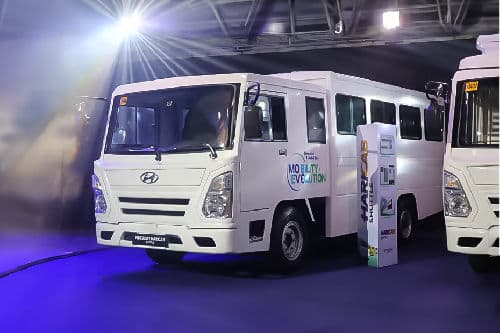
Hyundai HARI Cab Philippines 2026
Price on request

26
Expressway Score
0
Airbags
Class 1
Toll Class
Expressway Score
26/100BASIC
Score Breakdown
Overview
Priced from ₱699,000 to ₱2,362,000, the Hyundai HARI Cab serves as a practical choice for Filipino commuters and business owners alike. Its 2,891 cc diesel engine generates 157 hp and 392 Nm of torque, ensuring steady acceleration at expressway speeds of 80-100 kph, suited to busy routes like NLEX and SLEX. This vehicle falls under Class 1 for tolls and is compatible with both Autosweep and Easytrip RFID systems. Fuel efficiency ranges between 12-15 km/L, translating to a fuel cost of approximately ₱4.17 to ₱5.21 per km based on the current diesel price of ₱57.80/L. This efficiency is crucial for reducing operational expenses on long hauls. The HARI Cab's spacious interior caters to both passenger and cargo needs, making it suitable for daily commutes or business operations. With a solid dealer network and potential for good resale value, the Hyundai HARI Cab is a sensible investment for navigating the Philippine expressways.
This overview is AI-assisted based on manufacturer specifications and Philippine market data. Specs and pricing are sourced from official dealership listings. Editorial Policy
Expressway Driving Review
The Hyundai HARI Cab maintains steady performance at sustained speeds of 80-100 kph on expressways like NLEX and SLEX, ensuring confident overtaking and smooth merging, especially on the Skyway Stage 3. Fuel efficiency ranges from 12-14 km/L, translating to a cost of approximately ₱4.46-₱5.21 per kilometer based on the current diesel price of ₱57.80/L. This makes it a practical choice for long trips, whether you're heading to a business meeting or a weekend getaway. While the HARI Cab lacks advanced driver-assistance systems like cruise control and lane assist, it still provides decent ride comfort with effective cabin noise insulation that minimizes disruptions from wind and road noise. Passengers benefit from ample space, making lengthy drives more enjoyable. The vehicle operates under the Easytrip RFID system and falls under Class 1 for toll classification, suitable for everyday expressway use.
This review is AI-assisted based on manufacturer specifications and Philippine market data. Specs and pricing are sourced from official dealership listings. Editorial Policy
Driver Assistance Features
Hyundai HARI Cab 2025 Price & Variants
| Variant | Price | Transmission | Fuel |
|---|---|---|---|
| HARI Cab Standard | ₱699,000 | MT | diesel |
Specifications
Engine & Performance
- Displacement
- 2,891 cc
- Power
- 157 hp
- Torque
- 392 Nm
- Transmission
- MANUAL
- Fuel Type
- diesel
Dimensions
- Length × Width × Height
- 0 × 0 × 0 mm
- Wheelbase
- 0 mm
- Ground Clearance
- 0 mm
- Kerb Weight
- 0 kg
Fuel Efficiency
Fuel efficiency data not yet available for the Hyundai HARI Cab.
Pros & Cons for Expressway Driving
Pros
- ✓The Hyundai HARI Cab features a 2891.0 cc diesel engine producing 157 hp, providing enough power for overtaking slower vehicles on NLEX at 100 kph.
- ✓With a maximum torque of 392 Nm, this vehicle accelerates well even when fully loaded, making it suitable for transporting goods on long trips.
- ✓The manual transmission enhances driver engagement, allowing for responsive power delivery and potentially better fuel efficiency during expressway travel.
- ✓Priced at ₱699,000, it's competitive among commercial vehicles, delivering good value for businesses looking to minimize operational costs.
- ✓Its spacious cabin comfortably seats up to three passengers while offering ample cargo space, suited to long-distance hauls along SLEX.
- ✓Classified as a Class 2 vehicle, it incurs lower toll fees, such as ₱158 for an Alabang-Calamba trip, helping businesses save on travel expenses.
- ✓Diesel fuel efficiency typically yields around 10-12 km/L, making a round trip from Balintawak to Bocaue cost around ₱98 for fuel.
Cons
- ✗The manual transmission can lead to driver fatigue in heavy traffic conditions on expressways like EDSA, reducing overall comfort during commutes.
- ✗As a commercial vehicle, it lacks luxury features like advanced infotainment systems, which may detract from passenger comfort on longer trips.
- ✗The absence of modern safety features, such as multiple airbags, increases risk during high-speed travel on expressways, especially in the event of an accident.
- ✗Trunk space may be limited compared to larger vans, posing challenges for businesses that require more extensive cargo capacity for express deliveries.
- ✗As a diesel vehicle, it may face stricter emissions regulations in urban areas, impacting its usability for city-based operations.
- ✗The overall design may not appeal to consumers seeking a stylish or modern vehicle aesthetic, especially for urban driving scenarios.
This analysis is AI-assisted based on manufacturer specifications and Philippine market data. Specs and pricing are sourced from official dealership listings. Editorial Policy